





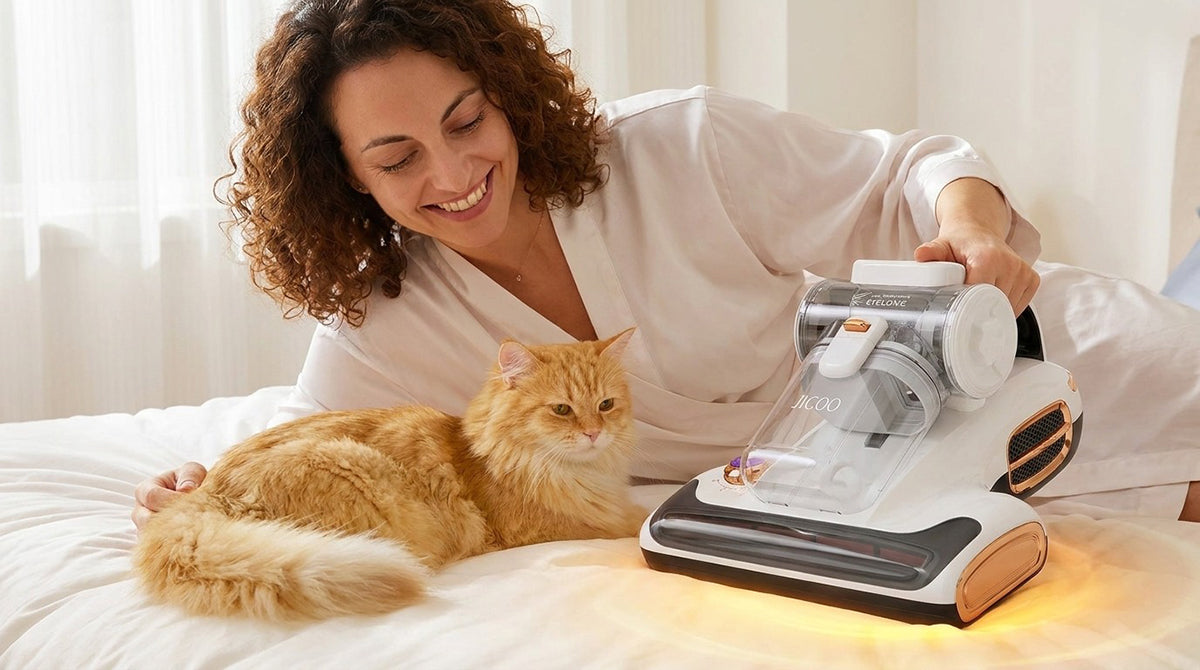
Introduction — 2 a.m., and the Tissue on the Nightstand
The cat is asleep against your arm. Her breathing is slow and comfortable. Yours isn't.
You've reached for a tissue three times tonight, and you're starting to wonder whether keeping your pet out of the bedroom would make things easier.
But then comes the guilt. Your pet is part of the family. Sleeping together is part of the routine. Giving that up doesn't feel like a great solution either.
Before you close the bedroom door, take a closer look at the bed itself.
Pets can bring hair, dander, dust and outdoor particles into the bedroom. Over time, these materials can settle into bedding and mattress surfaces. Regular cleaning won't change the fact that you have a pet, but it can change how much everyday buildup is left around you.
For pet parents heading into fall, that makes mattress cleaning a practical part of keeping the cuddles.
Why Sleeping With Pets Can Make Your Bed Harder to Keep Clean
Pet Hair Is Only Part of the Problem
Pet hair is the easiest part of the problem to spot. It collects on sheets, blankets and mattress surfaces, especially where your pet sleeps most often.
But pet hair isn't the same thing as pet allergens.
Allergenic proteins associated with cats and dogs can be found in materials such as dander, saliva and other secretions. Hair can also carry these materials as it moves around the home.
So even after visible fur is gone, a mattress can still hold finer particles that are much harder to see.
Pets Bring More Than Fur Into the Bedroom
Every trip onto the bed can bring more than hair.
Pet dander, dust and outdoor particles can settle on fur and transfer to bedding and upholstered surfaces. Depending on where you live and the season, pollen can become part of that mix too.
People contribute to the buildup as well. Dust, skin cells and fabric fibers naturally accumulate in bedrooms through everyday use.
This doesn't mean your bedroom is dirty. It means soft surfaces collect material over time.
Why the Mattress Deserves More Attention
The mattress is easy to overlook because it doesn't go into the washing machine.
Yet it receives hours of contact every night. If your pet returns to the same sleeping spot again and again, that area may also collect more hair and fine debris.
That makes the mattress an important part of a regular mattress cleaning routine rather than something to deal with only during spring cleaning. It also raises a practical question for pet owners: how often should you vacuum with pets?
There is no one schedule for every home, but pets that shed heavily or sleep on the bed regularly may need more frequent cleaning.
Why Fall Makes Pet Allergies Harder to Manage
1.Seasonal Pollen Comes Along for the Ride
Pollen seasons vary by location, but late-summer and fall pollens affect many parts of North America and Europe.
Outdoor particles can enter the home on clothing, shoes and pet fur. If your dog comes back from a walk and jumps straight onto the bed, some of that material can end up where you sleep.
2.More Time Indoors Changes the Routine
As temperatures fall, people often spend more time indoors and may change how they ventilate their homes.
That can make the bedroom more important as an indoor environment because it is where you spend several hours at a time.
The answer isn't to keep every outdoor particle out of the house. A more realistic goal is to prevent everyday buildup from accumulating unchecked on the surfaces you use most.
3.Dust-Mite Activity Builds Through Warm, Humid Periods
Dust mites prefer warm, humid environments, and mattresses and bedding can provide suitable conditions.
Their allergens can remain in household dust even after seasonal conditions change. Keeping mattress surfaces clean and dry is therefore one useful part of general bedroom maintenance.
What Could Be Building Up in Your Mattress?
Pet Hair and Visible Debris
This is the part you can see.
Look at your pet's favorite sleeping area and you'll often find the most hair and loose debris there.
Pet Dander and Fine Particles
Dander is much harder to identify because it isn't visible like a clump of fur.
It can become part of household dust and settle on soft fabrics, which is why a mattress that looks clean can still benefit from deeper cleaning.
Dust and Other Household Allergens
Mattresses also collect ordinary household dust, skin cells, fabric fibers and other fine debris.
Research illustrates how common pet allergens can be in bedroom environments. A 2025 study of 3,399 U.S. adults found elevated pet allergen exposure was the most prevalent of the indoor allergen exposures measured, at 41.2%.
The EASY study of 256 children aged 6–12 in Boston also detected cat allergen in 72% of households and dog allergen in 53% of households based on bedroom dust samples. These findings show that pet allergens can be common indoors, but they do not mean that every pet owner will experience allergy symptoms from their mattress.
Is Washing Your Bedding Enough?
Clean Sheets Don't Mean a Clean Mattress
Washing sheets and washable bedding is an important part of bedroom hygiene.
But bedding is only the washable layer.
The mattress underneath can still collect hair, dust and fine particles between washes. That's why washing your sheets and mattress cleaning should be treated as two connected tasks.
Why Mattresses Are Harder to Clean
A mattress cannot simply be placed in a washing machine.
Its fabric and layered construction can also allow loose material to settle rather than remain entirely on the surface.
This is where a mattress vacuum cleaner can be useful. It provides a practical way to clean the mattress surface without removing the mattress from the bed.
Mattress Protectors Help — but They're Not the Whole Solution
A mattress protector creates a useful barrier and makes regular washing easier.
But the protector itself can collect hair, dust and dander. It doesn't eliminate the need to clean the mattress underneath from time to time.
Surface Cleaning vs. Deeper Mattress Cleaning
A lint roller is useful for visible hair.
An everyday vacuum can remove loose dust and debris.
For material held within fabric, mechanical agitation combined with suction can provide a more thorough approach.
The idea is simple: clean what you can see, then clean beyond it.
A Simple Cleaning Routine for Pet-Friendly Bedrooms
The goal isn't to spend an hour cleaning every night. It is to prevent everyday buildup from becoming a much bigger job later.
Daily — A 5-Minute Pass
Give the mattress a quick pass, focusing on the areas your pet uses most. Remove visible hair and loose debris before it accumulates.
Weekly — Deep Clean the Mattress
Strip the bed and work across the mattress surface with slow, overlapping passes.
Pay extra attention to:
- Edges and seams
- Your pet's favorite sleeping area
- The area around the headboard
- Any place where hair tends to collect
Then wash the removed bedding according to its care instructions.
Monthly — Keep the Mattress Surface Dry
If your mattress cleaner has a warm-air drying function, use it as part of regular mattress care.
The purpose is to help manage surface moisture, not to replace cleaning or claim to treat allergies.
Don't Skip the Rest of the Pet's Spots
Your mattress isn't the only surface that matters.
Include pet beds, mats, blankets, sofa cushions, upholstered chairs and other places where your pet regularly sleeps.
Keep Bedding on a Fixed Washing Schedule
Wash sheets and washable bedding regularly, following the care label for the appropriate temperature.
Consistency matters more than an occasional intensive cleaning session.
What Makes Mattress Cleaning Easier for Pet Owners?
A mattress vacuum cleaner needs to do more than remove visible hair.
Look for:
- Consistent suction to collect fine dust and debris
- Mechanical agitation to loosen material held in fabric
- Effective hair handling for homes with heavy shedders
- Clear cleaning feedback so you know where additional passes may be useful
- Easy handling so the machine actually gets used regularly
The best cleaning routine is the one you can realistically maintain.
How the JIGOO T600 Fits Into a Pet-Friendly Cleaning Routine
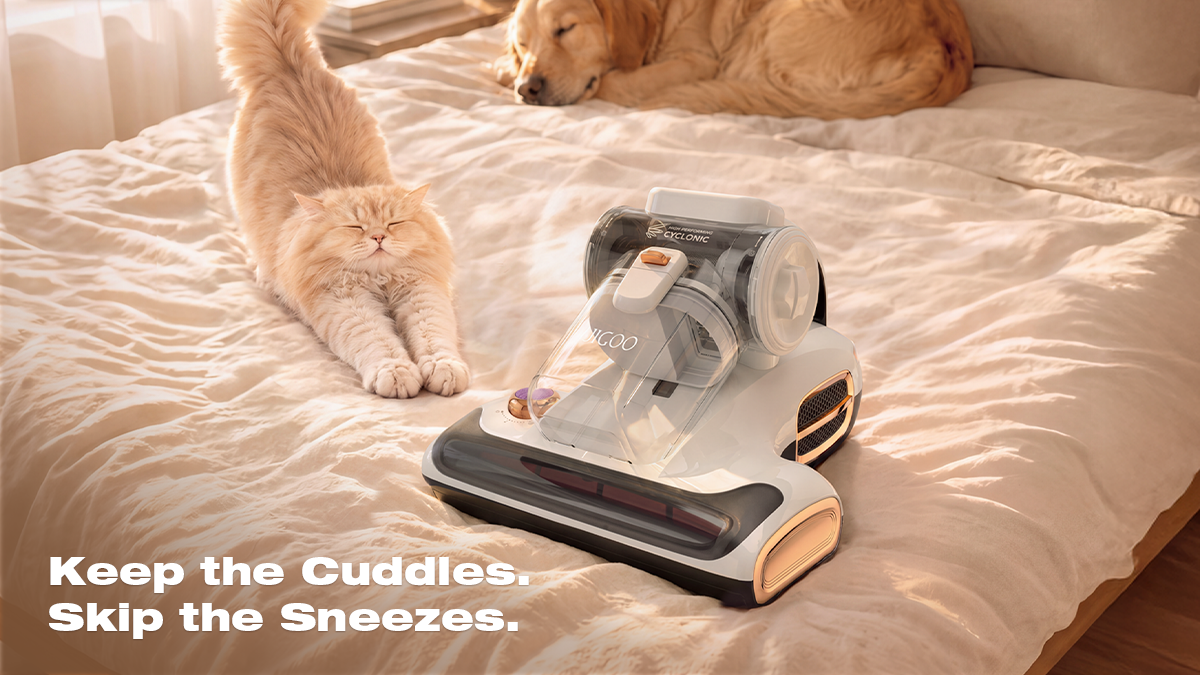
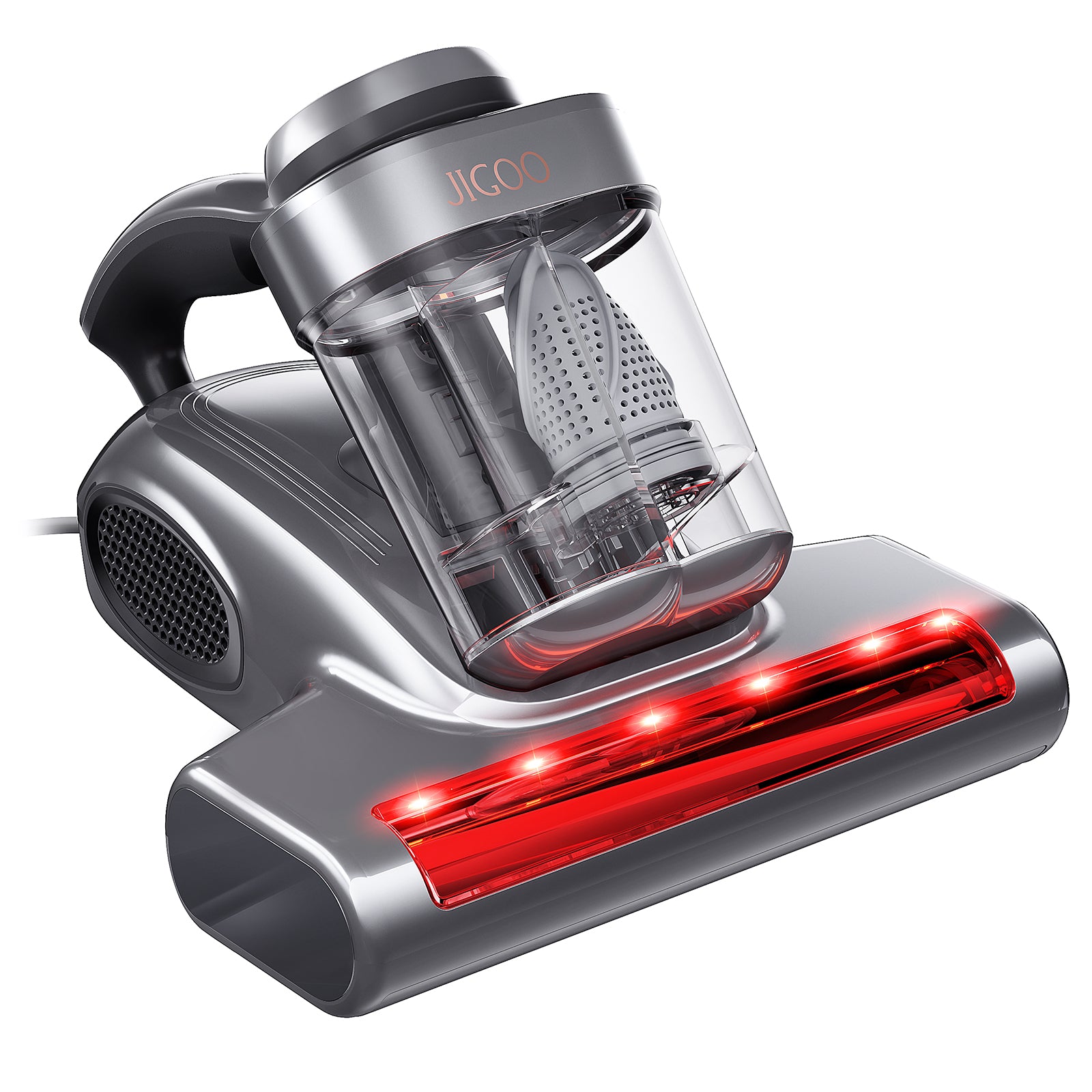
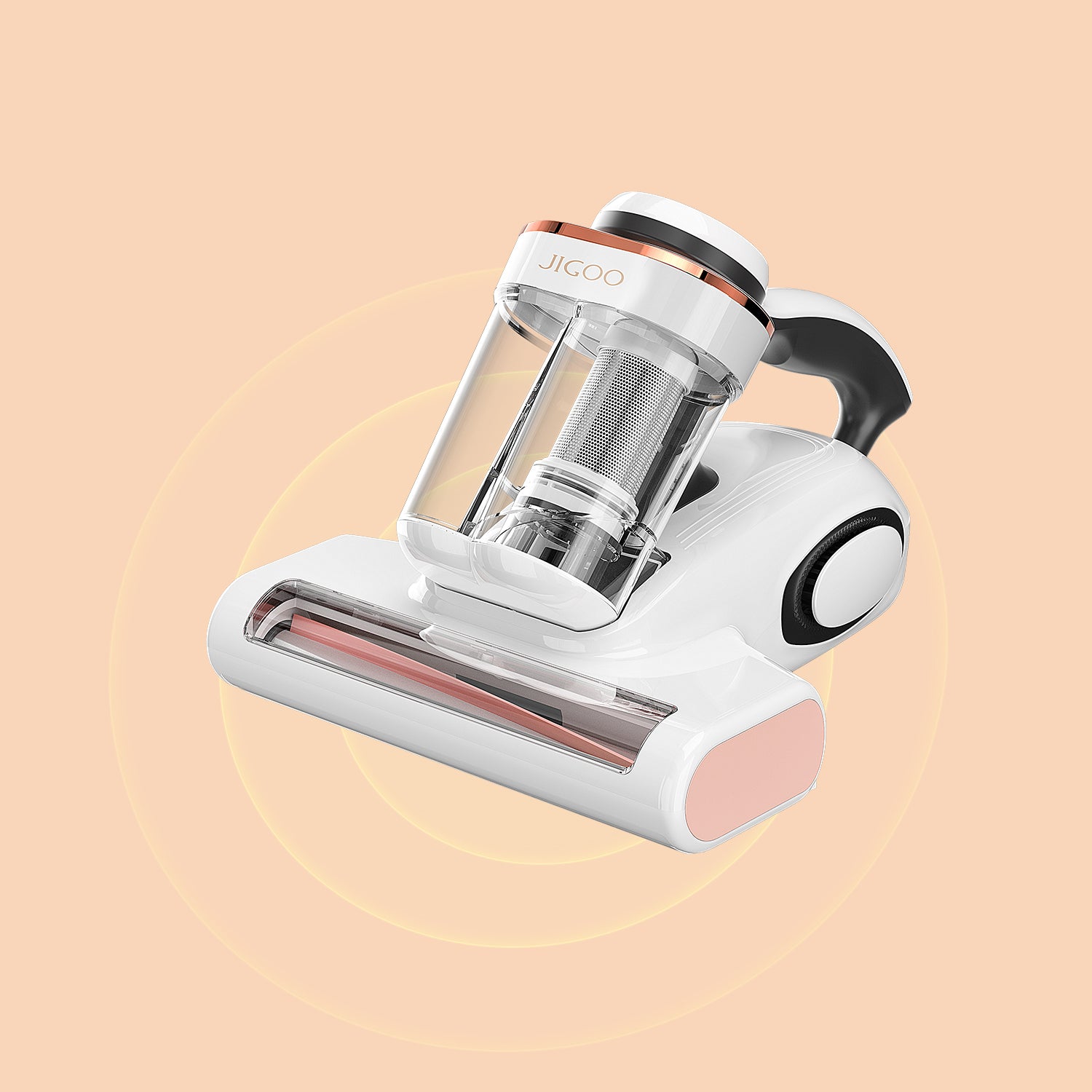
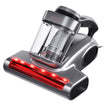
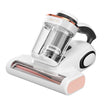
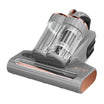
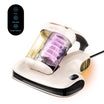
The JIGOO T600 is designed specifically for mattress cleaning, making it relevant to homes where pets regularly sleep on beds and upholstered surfaces.
15 kPa Suction + Metal Roller Brush
The metal roller brush agitates the mattress surface while 15 kPa suction collects the loosened material.
Together, these functions address more than hair sitting loosely on top of the fabric. The brush helps loosen material while suction collects what has been lifted.
Independent Dual Dust Cups
Pet hair can quickly become a nuisance during cleaning.
The T600's independent dual dust-cup design helps manage collected material when you're dealing with larger amounts of hair and debris.
UV and 60°C Warm Air
The T600 combines UV treatment with a 60°C warm-air function. The warm-air function can be used as part of regular mattress care to help manage surface moisture.
LED Cleaning Indicator
The LED indicator provides visual feedback during cleaning, changing from red toward green as you work across the surface.
Instead of relying entirely on guesswork, you have a visible reference for the cleaning process.
72 dB for a Quieter Cleaning Experience
At around 72 dB, the T600 is designed to provide a quieter cleaning experience than many conventional vacuum cleaners.
For pet owners, that can make regular cleaning less disruptive and easier to fit into everyday life.
Proof You Can See: The Dust Cup Doesn't Lie
One of the most satisfying parts of mattress cleaning is seeing what was actually collected.
For a real-world demonstration, show:
- The dust cup after a week of co-sleeping
- Hair and fine debris collected during a full mattress pass
- The LED changing during cleaning
- An optional at-home test-kit demonstration, clearly labelled as a household reference rather than clinical evidence
The goal isn't to claim that a dust cup can measure allergy risk.
It's simpler: a mattress can hold more than you can see.
You Don't Have to Choose Between Cleanliness and Cuddles
A pet-friendly bedroom doesn't need to be perfectly sterile.
It needs a routine that keeps everyday buildup under control.
A few minutes of regular cleaning, a weekly mattress clean and consistent bedding care can make sharing your home — and your bed — with a pet easier to manage.
So keep the pet on the bed.
Just don't forget the mattress underneath.
Join the #CuddleWithoutTheSneeze challenge. Share your co-sleeping and cleaning routine with #JIGOOT600 and #CleanTok.
Frequently Asked Questions
Can I sleep with my dog or cat if I have allergies?
It depends on your individual symptoms and sensitivity. Sharing a bed can increase exposure to pet allergens because of prolonged close contact. Regular cleaning can help reduce the amount of hair, dander and dust around the sleeping area. If your symptoms are severe or you have asthma, consult a healthcare professional.
Does sleeping with pets make allergies worse?
It can increase exposure to pet allergens, particularly when dander and other particles accumulate in bedding and mattresses. Regular mattress cleaning and bedding care can help manage the buildup.
How often should I clean my mattress if I have a pet?
A quick daily pass, a weekly deeper clean and regular care of bedding and pet sleeping areas provide a practical starting point. Adjust the frequency based on how much your pet sheds and how often they sleep on the bed.
Is vacuuming enough to clean a mattress?
Vacuuming can remove loose hair, dust and debris. A mattress vacuum cleaner with mechanical agitation and suction can provide a more targeted approach to cleaning fabric surfaces.
How do I remove pet hair and dander from a mattress?
Start by removing and washing the bedding. Clear visible hair, then use a mattress vacuum cleaner with slow, overlapping passes across the mattress surface. Pay extra attention to seams, edges and your pet's favorite sleeping area.