



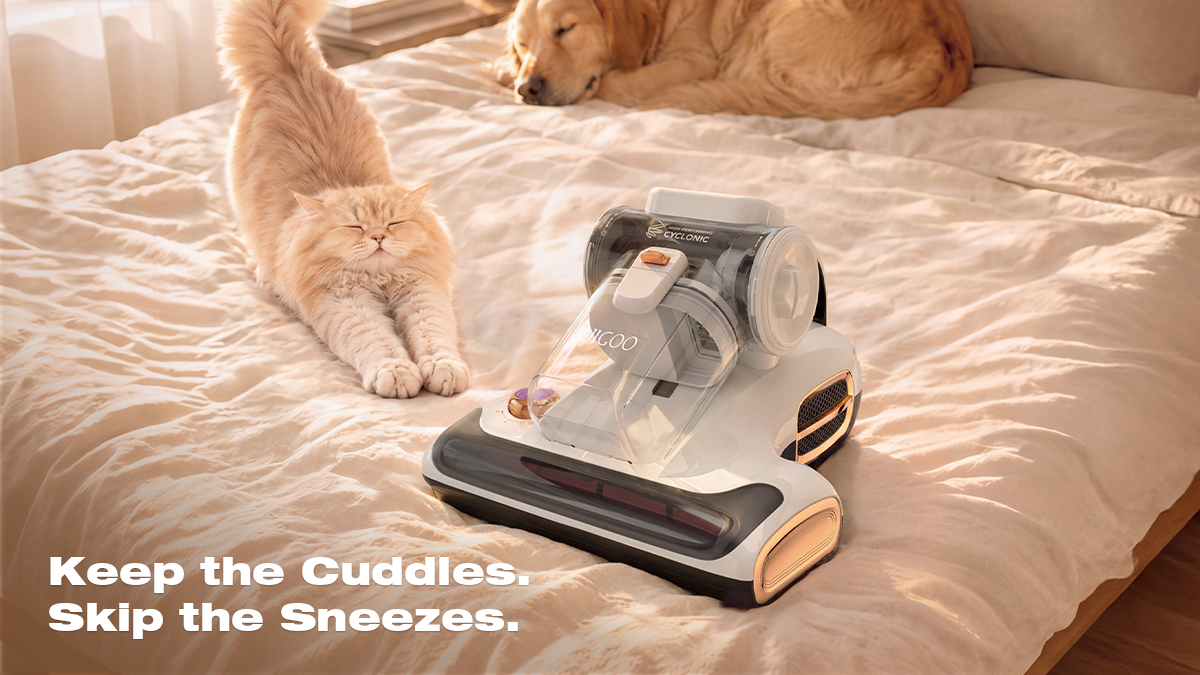
Introduction — You Can See the Hair. Can You See Everything Else?
Run a lint roller across the bed and you'll probably collect a satisfying layer of fur.
The mattress looks cleaner immediately.
But if someone in the household still wakes up sneezing, there is an obvious question: what did the lint roller miss?
The answer starts with understanding the difference between pet hair and pet dander.
They are not the same material. They behave differently, collect differently and require different cleaning approaches.
And when your pet regularly sleeps on the bed, that distinction matters.
Why We Notice Pet Hair — and What It Can Carry
The Visible Trail: Shed Hair Around the Home
Pet hair is the easiest part of a pet household to spot.
It collects on bedding, sofas, carpets and clothing. Shedding varies by animal, breed and coat, and some pets shed more heavily during seasonal changes.
Because hair is visible, it's also the first thing most people clean.
Why Pet Hair Isn't the Same as Pet Allergens
Pet hair itself is generally not the main allergen.
Pet allergies are commonly associated with allergenic proteins found in dander, saliva and other secretions. Hair can still matter because it can carry these proteins, along with dust and outdoor particles, as it moves around the home.
That's why removing every visible hair from a mattress does not necessarily mean that all pet-related allergens have been removed.
Where Hair Collects — and the False Sense of Clean
Hair settles wherever pets spend time:
- Beds
- Sofas
- Blankets
- Carpets
- Clothing
Once the visible hair is gone, the surface looks clean.
That's where the false sense of completion begins.
What Is Pet Dander? The Less Visible Part of the Problem
l Tiny and Shed Continuously
Pet dander consists of microscopic flakes of shed skin.
Unlike a strand of hair, individual particles are difficult to see. They can become part of household dust and may be disturbed when people or pets move across a surface.
l Why It's Easy to Miss
Can you see pet dander? Usually not with the naked eye. Unlike the obvious piles of fur that collect on bedding, individual dander particles are much harder to see.
A mattress may look perfectly clean while still holding fine particles in its fabric.
This is one reason visual inspection isn't enough to decide whether a mattress needs cleaning.
l Where It Accumulates
Pet-related particles can accumulate on many soft surfaces, including:
- Mattresses
- Sofa cushions
- Pet beds
- Blankets
- Carpets and rugs
The more frequently a pet uses a surface, the more attention it deserves in a regular cleaning routine.
l Why It Matters for Allergy-Sensitive Households
One important distinction: dander itself isn't the allergen.
The concern is the allergenic proteins associated with pet dander, saliva and other secretions.
A 2025 study of 3,399 U.S. adults found elevated pet allergen exposure was the most prevalent of the indoor allergen exposures measured, affecting 41.2% of the adults studied.
The EASY study collected bedroom dust samples from 256 children aged 6–12 in Boston and detected cat allergen in 72% of households and dog allergen in 53%. These results demonstrate that pet allergens can be common in bedroom environments, but they do not establish that every household or mattress containing pet allergens will cause symptoms.
Pet Hair vs. Pet Dander: Side by Side
| Dimension | Pet Hair | Pet Dander |
|---|---|---|
| What it is | Shed hair fibers | Microscopic flakes of shed skin |
| Visibility | Usually visible | Not visible to the naked eye |
| Behavior | Mostly settles where it lands | Can become part of airborne or settled dust |
| Allergy relevance | Can carry allergenic proteins | Can carry allergenic proteins |
| Where it collects | Bedding, furniture, carpets and clothing | Dust and soft fabric surfaces |
| Cleaning challenge | Easy to spot and remove | Easy to overlook |
The takeaway is simple: if you only clean what you can see, you're only cleaning part of the problem.
Why the Mattress Can Become a Hidden Collection Point
Frequent Contact With Pets
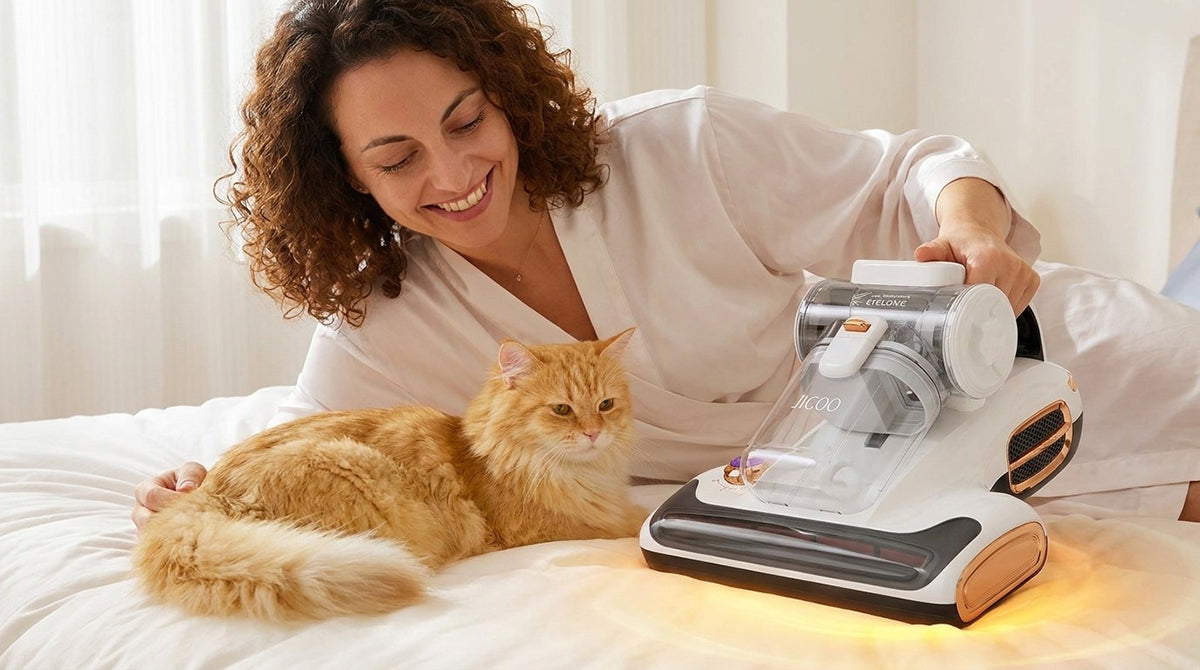
If your dog sleeps at the foot of the bed every night or your cat has claimed the pillow beside you, that area receives repeated exposure.
Over time, hair, dust and fine particles can accumulate where your pet spends the most time.
Fabric Layers Hold Fine Particles
Mattress fabric and padding can collect dust and fine particles.
Unlike sheets, the mattress itself cannot simply be placed in a washing machine. This makes it easier to overlook during everyday cleaning.
Hours of Contact Every Night
You spend several hours sleeping directly against the bedding and mattress.
That makes the bed one of the most important surfaces to include when planning regular mattress cleaning.
Why It's Overlooked
Mattresses are easy to forget because:
- They usually look clean
- They aren't washed as frequently as sheets
- Most people notice hair before fine particles
- Deep cleaning requires a suitable tool
Why Removing Visible Hair Is Only the First Step
Lint Rollers: Good at Surface Hair
Lint rollers are useful for removing visible pet hair.
They're quick and convenient, but they mainly collect what the adhesive touches.
Everyday Vacuuming: Handles Loose Debris
An everyday vacuum can pick up loose hair and dust.
However, floor vacuums aren't necessarily designed around mattress surfaces, and their brush systems may not be optimized for the combination of hair and fine debris found on bedding.
Washing Bedding: Clears the Washable Layer
Regularly washing sheets, duvet covers and washable protectors is essential.
But it doesn't clean the mattress underneath.
Beating + Suction: Going Deeper
A suitable mattress vacuum cleaner can combine mechanical agitation with suction.
The brush loosens material from the fabric while suction collects it.
This makes the approach different from simply running a vacuum over the surface and helps address the material that isn't immediately visible.
How to Remove Pet Hair and Dander From a Mattress
-
Start With Bedding and Washable Covers
Remove sheets, blankets and washable protectors. Wash them according to their care labels. -
Clear Visible Hair and Debris
Use a lint roller or quick vacuum pass to remove loose hair before the deeper clean. -
Deep Clean the Mattress Surface
Use a mattress vacuum cleaner designed for fabric surfaces. Make slow, overlapping passes rather than moving quickly across the bed. -
Focus on Edges, Seams and Favorite Spots
Hair and dust often collect around seams and edges. Give your pet's favorite sleeping area extra attention. -
Check What the Tool Collected
A visible dust cup can show you what was removed during cleaning. If you use an at-home allergen test kit, follow its instructions carefully and treat the result as a household reference rather than a clinical measurement. -
Maintain the Equipment
Empty the dust cup regularly and clean the filter and brush according to the manufacturer's instructions. A well-maintained machine is better positioned to maintain its intended performance.
What to Look for in a Mattress Vacuum Cleaner for Pet Households
Suction Power
Look for sufficient suction to collect fine dust and debris from fabric. Don't evaluate suction by the number alone; brush design and airflow also matter.
Mattress-Suitable Brush Design
A motorized beating brush can help loosen material held within mattress fabric rather than simply gliding over the surface.
Hair Handling and Dust Collection
For households with shedding pets, consider how the machine handles hair and whether the dust-collection system is easy to empty.
UV and Warm-Air Functions
These can be useful additional mattress-care functions. Check the manufacturer's specifications and intended use rather than assuming that these functions replace physical cleaning or treat allergies.
Visible Cleaning Feedback
An LED indicator can make it easier to identify areas that may need another pass.
Everyday Usability
A mattress vacuum cleaner should be easy enough to use regularly. Weight, handling, dust-cup emptying and brush maintenance all affect whether it becomes part of your routine.
How the JIGOO T600 Supports Deeper Mattress Cleaning
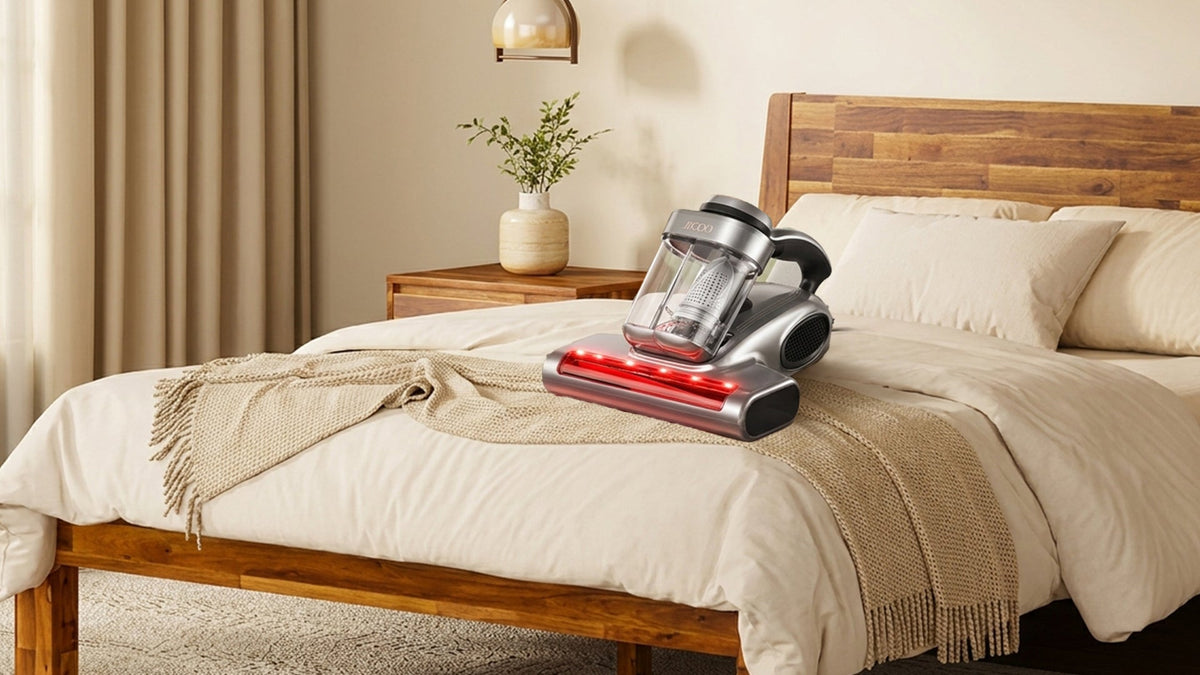
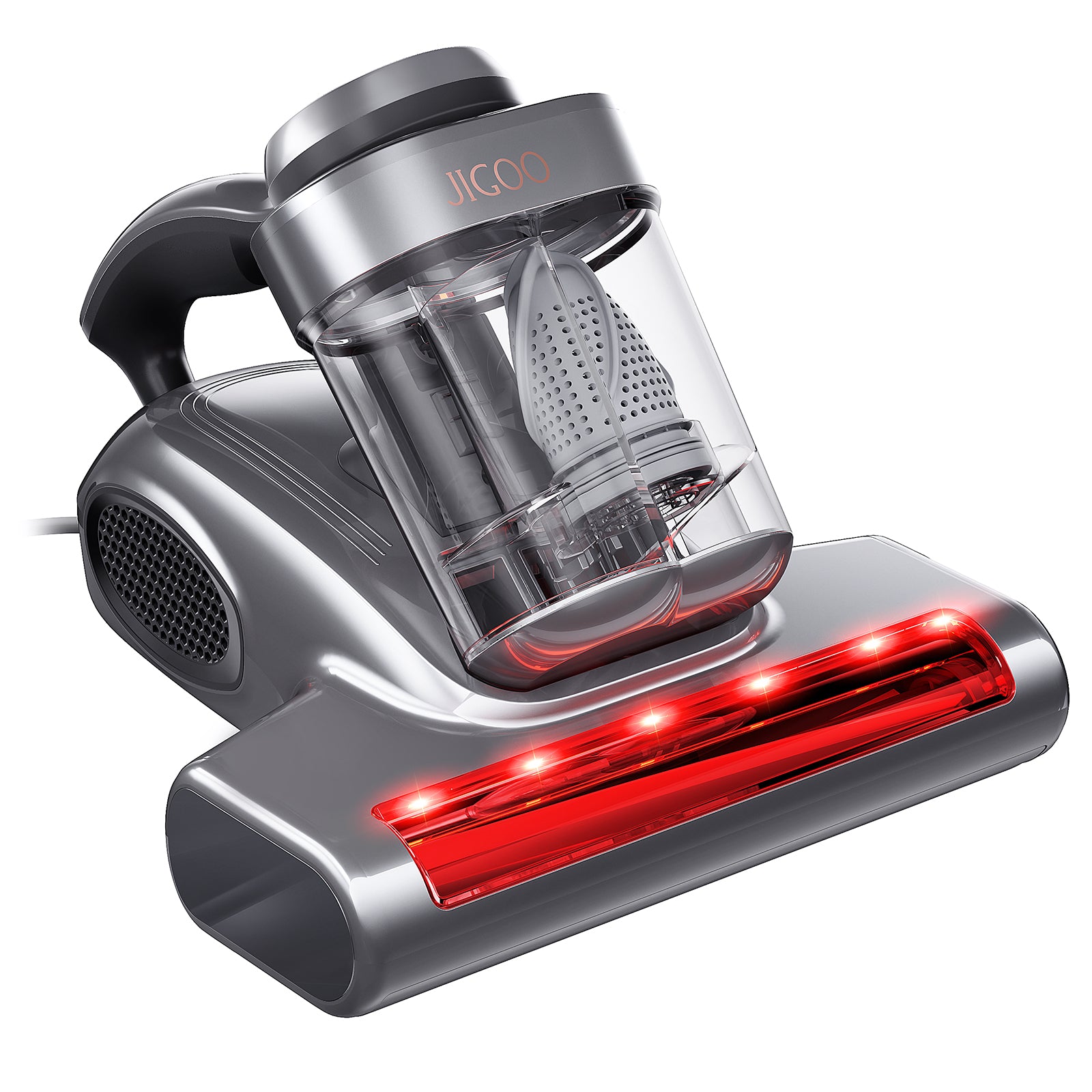
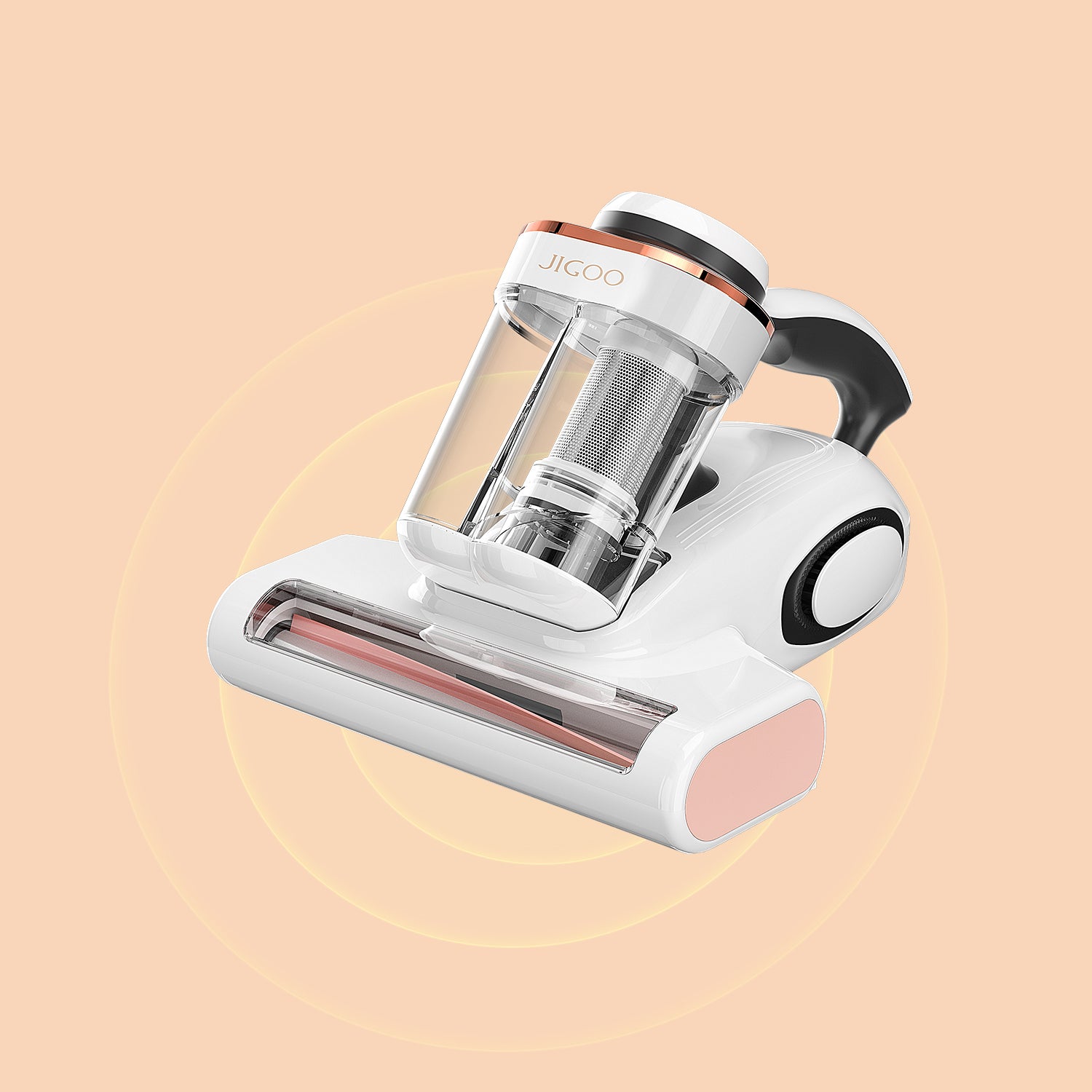
The JIGOO T600 mattress vacuum cleaner combines several features designed for regular mattress cleaning in pet households.
15 kPa Suction + Metal Roller Brush
The metal roller brush provides mechanical agitation while 15 kPa suction collects loosened hair, dust and fine debris.
This directly addresses the difference between visible hair and material that may be held within the mattress fabric.
Independent Dual Dust Cups
The independent dual dust-cup design is intended to handle collected material efficiently in homes where pet hair is part of the everyday cleaning load.
For households with shedding pets, this gives the cleaning process a dedicated way to manage the hair and debris being removed.
UV and 60°C Warm Air
The T600 includes UV and 60°C warm-air functions as additional mattress-care features. The warm-air function can help manage surface moisture as part of regular maintenance.
LED Cleaning Indicator
The LED indicator changes from red toward green during cleaning, giving users visible feedback as they work across the mattress.
That is particularly useful when the material you're trying to remove isn't easy to judge by sight.
72 dB for a Quieter Cleaning Experience
At around 72 dB, the T600 is designed for a quieter cleaning experience, which can make regular mattress cleaning less disruptive.
For a cleaning task that needs to happen regularly, everyday usability matters as much as the headline specifications.
Clean Beyond What You Can See
Pet hair is the visible part of the cleaning challenge.
Pet dander and other fine particles are much easier to overlook.
That's why effective mattress cleaning needs to go beyond removing the fur you can see.
If your pet sleeps on your bed regularly, make mattress care part of the same routine as washing your bedding.
A suitable mattress vacuum cleaner can help make that deeper step easier to maintain, while the Jigoo T600 brings mechanical agitation, suction and cleaning feedback into one dedicated mattress-cleaning tool.
The goal isn't to make your bedroom perfectly sterile.
It's to clean beyond what your eyes can see.
Share this with a fellow pet parent.
Frequently Asked Questions
What is the difference between pet hair and pet dander?
Pet hair is shed hair that is usually visible on bedding and furniture. Pet dander consists of microscopic flakes of shed skin and is much harder to see. Hair can also carry allergenic proteins.
How long does pet dander last?
Pet dander can remain in household dust and on soft surfaces after it has been shed. How long it remains depends on factors such as the surface, cleaning frequency and indoor environment. Regular cleaning can help reduce the buildup.
Can pet dander get into a mattress?
Pet-related particles can settle into mattress fabric and household dust over time, particularly when pets regularly sleep on the bed.
Does vacuuming remove pet dander?
Vacuuming can remove some loose pet-related particles. A mattress vacuum cleaner that combines mechanical agitation and suction can provide a more targeted approach to removing material from fabric surfaces.
How do you clean pet dander from a mattress?
Wash the bedding first, remove visible hair, then use a suitable mattress vacuum cleaner with slow, overlapping passes across the mattress. Focus on seams, edges and your pet's favorite sleeping area.